How to disable notification bubbles on android
Recently launched Android Q Beta 2 update includes several changes such as notification bubbles, new iPhone X style gesture to quickly switch between apps, emulator for foldable screen, swipe action for notifications and more. But in this tutorial, I’ll show you complete process to enable or disable notification bubbles in Android Q Beta 2 devices including Google Pixel, Pixel XL, Pixel 2, Pixel 2 XL, Pixel 3 and Pixel 3 XL.
You can individually turn on bubble notifications for app in android Q Beta 2 using apps and notification settings in all Pixel devices. If you don’t want to use notification bubbles, disable bubbles notification on android Q Beta 2. Check out below given step by step process to turn notification bubbles on or off in your Pixel devices.
You May Like This:
How to enable or disable notification bubbles in Android Q Beta 2 / Android 10
You can change Android Q Beta 2 notification bubbles settings for apps using below given apps and notification settings.
1 st Way: Turn on or turn off notification bubbles for individually app
Step 1: Swipe down from top of the screen twice and tap Settings gear icon
Step 2: Tap Apps and notifications
In Android Q Beta 2 update, you can see last three recently opened apps as horizontally instead of vertical in Android Q Beta 1.
Step 3: Tap See all apps
List of install all apps available in your device.
Step 4: Select app you want to disable app bubble for notifications
Step 5: Tap Notifications
You can see list of app notification settings in android Q Beta 2.
Step 6: Tap Advanced at end of the page
Here you can see “allow notification dot” and “allow notification bubbles” options. By default turned on both option.
Step 7: Now enable/disable bubble notification for app in android Q Beta 2 on Pixel devices you want
2 nd Method: Disable notification bubbles in Android Q Beta 2 for all apps at once
You can enable or disable notification bubbles in Android Q Beta 2 on Google Pixel and other Pixel devices using below given settings.
Step 1: Open app drawer in your android Q and tap Settings app
Step 2: Tap Apps & notifications
Here you can see time spent in apps, Notifications, default apps, permission manager, emergency alert and special app access settings.
Step 3: Tap Notifications
Step 4: Tap Advanced
You can see new added Swipe actions feature for notification in your running android Q Beta 2 supported devices.
Step 5: Turn off “Allow notification bubbles” toggle
It will disable notification bubbles for all apps at once in your android Q Beta 2. Now open any apps notification settings and you can’t see allow notification bubble option. To see this setting, turn on it again using above settings.
And that’ll. We hope this makes it clear how to enable or disable notification bubbles in Android Q Beta 2. If you have any kind of trouble, tell us in below comment box. Stay and connect with us for latest updates.
The notification “Bubble” is a feature introduced in Android 11 that works like Facebook Messenger’s “Chat Heads.” Conversations can be popped-out into windows that overlay your current activity. If you don’t want to use Bubbles, it can be disabled.
Bubbles are an opt-out feature, meaning they’re enabled by default. When an app presents a Bubble for the first time, you’ll have the option to turn off Bubbles for that specific app. If you’d like, it’s also possible to turn off Bubbles for all apps entirely.
Disable Bubbles for Specific Apps
On your Android phone or tablet, swipe down from the top of the screen (once or twice depending on your device’s manufacturer), and then tap the Gear icon to open the “Settings” menu.
Scroll down and select “Apps and Notifications.”
At the top of the screen, select “See all (X) Apps,” where “X” is the number of apps you have.
Tap the app you don’t want to use Bubbles.
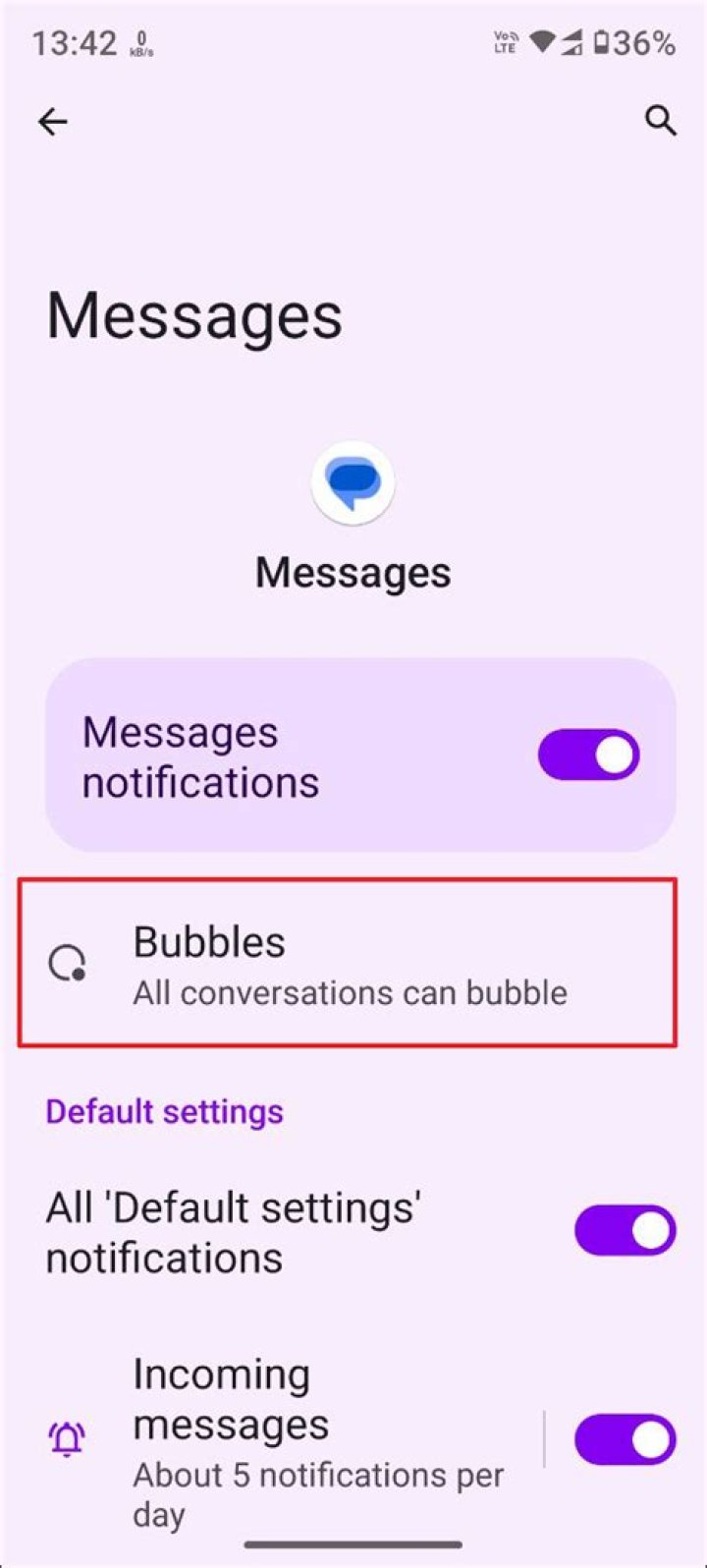
Finally, tap “Bubbles.”
Switch the setting to “Nothing Can Bubble.”
Now, whenever you receive a new message in that app, you’ll no longer see a Bubble.
Disable Bubbles for Specific Conversations
When an app supports Bubbles, you’ll see a little icon in the bottom-right corner of the notification. Tap it to move the conversation to a floating window.
Tap “Manage” under the pop-up window.
This opens a context menu of options for the app. Tap “Don’t Bubble Conversation” to disable Bubbles for this specific conversation.
Disable Bubbles Entirely
If you’d rather disable the notification Bubbles for all apps, you can do that, too! On your Android phone or tablet, swipe down from the top of the screen (once or twice depending on your device), and then tap the Gear icon to open the “Settings” menu.
Select “Apps and Notifications.”
Next, tap “Notifications.”
In the top section, tap “Bubbles.”
Toggle-Off the switch for “Allow Apps to Show Bubbles.”
Now, no apps will be able to use Bubbles. You can return to this screen any time to re-enable the Bubbles feature.
The notification “Bubble” is a feature introduced in Android 11 that works like Facebook Messenger’s “Chat Heads.” Conversations can be popped-out into windows that overlay your current activity. If you don’t want to use Bubbles, it can be disabled.
Bubbles are an opt-out feature, meaning they’re enabled by default. When an app presents a Bubble for the first time, you’ll have the option to turn off Bubbles for that specific app. If you’d like, it’s also possible to turn off Bubbles for all apps entirely.
Disable Bubbles for Specific Apps
On your Android phone or tablet, swipe down from the top of the screen (once or twice depending on your device’s manufacturer), and then tap the Gear icon to open the “Settings” menu.
Scroll down and select “Apps and Notifications.”
At the top of the screen, select “See all (X) Apps,” where “X” is the number of apps you have.
Tap the app you don’t want to use Bubbles.
Finally, tap “Bubbles.”
Switch the setting to “Nothing Can Bubble.”
Now, whenever you receive a new message in that app, you’ll no longer see a Bubble.
Disable Bubbles for Specific Conversations
When an app supports Bubbles, you’ll see a little icon in the bottom-right corner of the notification. Tap it to move the conversation to a floating window.
Tap “Manage” under the pop-up window.
This opens a context menu of options for the app. Tap “Don’t Bubble Conversation” to disable Bubbles for this specific conversation.
Disable Bubbles Entirely
If you’d rather disable the notification Bubbles for all apps, you can do that, too! On your Android phone or tablet, swipe down from the top of the screen (once or twice depending on your device), and then tap the Gear icon to open the “Settings” menu.
Select “Apps and Notifications.”
Next, tap “Notifications.”
In the top section, tap “Bubbles.”
Toggle-Off the switch for “Allow Apps to Show Bubbles.”
Now, no apps will be able to use Bubbles. You can return to this screen any time to re-enable the Bubbles feature.
Disable Bubbles for Specific Apps
On your Android phone or tablet, swipe down from the top of the screen (once or twice depending on your device’s manufacturer), and then tap the Gear icon to open the “Settings” menu.
Scroll down and select “Apps and Notifications.”
At the top of the screen, select “See all (X) Apps,” where “X” is the number of apps you have.
Tap the app you don’t want to use Bubbles.
Finally, tap “Bubbles.”
Switch the setting to “Nothing Can Bubble.”
Now, whenever you receive a new message in that app, you’ll no longer see a Bubble.
Disable Bubbles for Specific Conversations
When an app supports Bubbles, you’ll see a little icon in the bottom-right corner of the notification. Tap it to move the conversation to a floating window.
Tap “Manage” under the pop-up window.
This opens a context menu of options for the app. Tap “Don’t Bubble Conversation” to disable Bubbles for this specific conversation.
Disable Bubbles Entirely
If you’d rather disable the notification Bubbles for all apps, you can do that, too! On your Android phone or tablet, swipe down from the top of the screen (once or twice depending on your device), and then tap the Gear icon to open the “Settings” menu.
Select “Apps and Notifications.”
Next, tap “Notifications.”
In the top section, tap “Bubbles.”
Toggle-Off the switch for “Allow Apps to Show Bubbles.”
Now, no apps will be able to use Bubbles. You can return to this screen any time to re-enable the Bubbles feature.
banner.png (30.53 KB, Downloads: 0)
2020-09-22 14:52:43 Upload
Hello Mi Fans,
The notification “Bubble” is a feature introduced in Android 11 that works like Facebook Messenger’s “Chat Heads.” Conversations can be popped-out into windows that overlay your current activity. If you don’t want to use Bubbles, it can be disabled.
Bubbles are an opt-out feature, meaning they’re enabled by default. When an app presents a Bubble for the first time, you’ll have the option to turn off Bubbles for that specific app. If you’d like, it’s also possible to turn off Bubbles for all apps entirely.
Disable Bubbles for Specific Apps
On your Android phone or tablet, swipe down from the top of the screen (once or twice depending on your device’s manufacturer), and then tap the Gear icon to open the “Settings” menu.
01.png (22.37 KB, Downloads: 0)
2020-09-22 14:52:45 Upload
Scroll down and select “Apps and Notifications.”
02.png (33.42 KB, Downloads: 0)
2020-09-22 14:52:47 Upload
At the top of the screen, select “See all (X) Apps,” where “X” is the number of apps you have.
03.png (24.48 KB, Downloads: 0)
2020-09-22 14:52:49 Upload
Tap the app you don’t want to use Bubbles.
04.png (14.29 KB, Downloads: 0)
2020-09-22 14:52:51 Upload
05.png (14.49 KB, Downloads: 0)
2020-09-22 14:52:54 Upload
Finally, tap “Bubbles.”
06.png (8.81 KB, Downloads: 0)
2020-09-22 14:52:56 Upload
Switch the setting to “Nothing Can Bubble.”
07.png (34.23 KB, Downloads: 0)
2020-09-22 14:52:58 Upload
Now, whenever you receive a new message in that app, you’ll no longer see a Bubble.
Disable Bubbles for Specific Conversations
When an app supports Bubbles, you’ll see a little icon in the bottom-right corner of the notification. Tap it to move the conversation to a floating window.
08.png (47.56 KB, Downloads: 0)
2020-09-22 14:53:00 Upload
Tap “Manage” under the pop-up window.
09.png (80.92 KB, Downloads: 0)
2020-09-22 14:53:02 Upload
This opens a context menu of options for the app. Tap “Don’t Bubble Conversation” to disable Bubbles for this specific conversation.
10.png (51 KB, Downloads: 0)
2020-09-22 14:53:03 Upload
Disable Bubbles Entirely
If you’d rather disable the notification Bubbles for all apps, you can do that, too! On your Android phone or tablet, swipe down from the top of the screen (once or twice depending on your device), and then tap the Gear icon to open the “Settings” menu.
11.png (22.37 KB, Downloads: 0)
2020-09-22 14:53:06 Upload
Select “Apps and Notifications.”
12.png (33.42 KB, Downloads: 0)
2020-09-22 14:53:08 Upload
Next, tap “Notifications.”
13.png (16.51 KB, Downloads: 0)
2020-09-22 14:53:10 Upload
In the top section, tap “Bubbles.”
14.png (18.55 KB, Downloads: 0)
2020-09-22 14:53:12 Upload
Toggle-Off the switch for “Allow Apps to Show Bubbles.”
15.png (20.26 KB, Downloads: 0)
2020-09-22 14:53:13 Upload
Now, no apps will be able to use Bubbles. You can return to this screen any time to re-enable the Bubbles feature.
One of the cool features of Facebook Messenger for Android is , “Chat Heads” which allows you to read and send Facebook chat messages without leaving your current screen. It is done by a small floating circle, containing the profile picture of the person you are chatting with.
Though this feature is undoubtedly amazing, there are some reasons for which you want it disabled:
- You may be busy with other works and chat head pop-up just distracts it. You feel disturbed.
- It may be killing your privacy. If you are sharing your phone with others, they are easily getting to know with whom you are chatting on Facebook.
- Android notification bar is just enough for you and you don’t want this feature.
Way to Get Rid of Facebook Chat Heads Pop-up in Android
1. Launch Facebook Messenger app, then go to settings by tapping on “Gear icon“. In the settings page, notice the “Chat Heads” section. Tap on it.
2. Now disable Chat Heads by tapping the switch “Off|on“.
You are done! Chat-heads bubble will no more appear. Though, chat alerts will still be shown up in android notification bar.
Author: Jaber Al Nahian
Jaber is a Programmer and Tech Enthusiast Geek from Dhaka, Bangladesh. He is the founder and Chief-Editor of TechGainer. While he is away from his keyboard, either he’s fishing or messing with wildlife. In case, you can contact him at rijans[at]techgainer[dot]com.
The notification “Bubble” is a feature introduced in Android 11 that works like Facebook Messenger’s “Chat Heads.” Conversations can be popped-out into windows that overlay your current activity. If you don’t want to use Bubbles, it can be disabled.
Bubbles are an opt-out feature, meaning they’re enabled by default. When an app presents a Bubble for the first time, you’ll have the option to turn off Bubbles for that specific app. If you’d like, it’s also possible to turn off Bubbles for all apps entirely.
Disable Bubbles for Specific Apps
On your Android phone or tablet, swipe down from the top of the screen (once or twice depending on your device’s manufacturer), and then tap the Gear icon to open the “Settings” menu.
Scroll down and select “Apps and Notifications.”
At the top of the screen, select “See all (X) Apps,” where “X” is the number of apps you have.
Tap the app you don’t want to use Bubbles.
Finally, tap “Bubbles.”
Switch the setting to “Nothing Can Bubble.”
Now, whenever you receive a new message in that app, you’ll no longer see a Bubble.
Disable Bubbles for Specific Conversations
When an app supports Bubbles, you’ll see a little icon in the bottom-right corner of the notification. Tap it to move the conversation to a floating window.
Tap “Manage” under the pop-up window.
This opens a context menu of options for the app. Tap “Don’t Bubble Conversation” to disable Bubbles for this specific conversation.
Disable Bubbles Entirely
If you’d rather disable the notification Bubbles for all apps, you can do that, too! On your Android phone or tablet, swipe down from the top of the screen (once or twice depending on your device), and then tap the Gear icon to open the “Settings” menu.
Select “Apps and Notifications.”
Next, tap “Notifications.”
In the top section, tap “Bubbles.”
Toggle-Off the switch for “Allow Apps to Show Bubbles.”
Now, no apps will be able to use Bubbles. You can return to this screen any time to re-enable the Bubbles feature.
When you get a new notification on Android, you get an alert on your lock screen. You can pull down the Notifications shade any time to view your unread notifications. If you want, you can enable an LED alert to accompany the alerts. On Android, you don’t have app icon badges. App icon badges tell you when you have unread notifications. An app icon badge shows you the number of unread alerts and it’s omnipresent on the app icon. It’s a simple way to tell, at a glance, if you have unread messages in the Gmail or Messages app. Come Android O, apps that choose to support them will now have app icon badges. You will of course have the option to enable or disable app icon badges for apps in Android.
App Icon Badges For All Apps
You can enable and disable app icon badges for all apps or for individual apps. Android O gives you complete freedom to choose which apps can add that extra bit of information on your Home Screen.
Open the Settings app and go to Apps & Notifications. Tap Notifications and enable or disable app icon badges by flipping the Allow icon badges switch on or off respectively.
App Icon Badges For Individual Apps
You can enable or disable app icon badges for individual apps. Open the Settings app and go to Apps & Notifications. Go to Notifications>Notifications. Tap the app you want to enable or disable. The app’s Notifications screen will have its own dedicated Allow icon badge switch. You can turn it on or off to enable or disable the app icon badge for that particular app.
App Support
This feature isn’t automatically added with Android O. The option to enable or disable app icon badges for apps is going to be there in the Settings app. That doesn’t mean the badges will show up on your home screen if you enable them. Apps, more specifically, app developers will have to add support for this new feature. You’re looking at an app update here. Given Android O is still in beta and we don’t even know what its official name is at present, there aren’t any apps that have support for badges at present.
Some apps have been able to figure out a way around this in the past. Case in point, the Facebook Messenger app with its floating app icon on the home screen. A lot of other apps have mimicked that approach. There are probably root solutions that will give you this feature on your Android phone right now but rooting now has its own problems where you’re locked out of apps like Pokèmon Go and Netflix. The default feature is going to be worth the wait.
8 Comments
I just updated to Oreo on my S8+ and I can’t get my Icon badges to show. I only have them turned on for Email, text messages and a weather app ( I live in Canada i need weather Notifications). I can’t figure out what I’m missing. Can anyone give me some advice.
“Android O gives you complete freedom to choose which apps can add that extra bit of information on your Home Screen”
FALSE. Android Oreo takes away every bit of control.
I have a Samsung Galaxy S8+ with Verizon, and I just got the Oreo upgrade.
This is kind of ironic, seeing as notifications were supposed to be the “big improvement” in this version. I am really anal about my notifications, because unlike many people, I don’t like things popping up on my phone and having it ding at me all the livelong day.
I have notifications turned off for everything except phone, text, and email. Phone calls and texts and pushed, obviously, and do make sounds. But I had email set to fetch and to not notify me, but still display an unread badge counter, so that when I’m actually using the phone, I’ll know I have unread emails. Basically, I want to know about it, but I don’t want it interupting my life. It was perfect.
Now it is all or nothing. In order to get the unread badge counter on apps, you have to have notifications 100% turned on for it, push, popups, displays on lockscreen, etc. The whole shebang. Otherwise, no unread counter.
To make matters even worse, once you clear the notification from the top pulldown tray, it wipes out the unread badge counter too! So, you want to make a notification go away and stop flashing at you so that you can read it later, but nope! Once you make it go away, it’s GONE forever–also clears the unread badge. Later, you have to remember that it actually happened!
I assume this is an improvement for Moto, LG, HTC, etc users who have stock Android and never had an unread badge counter, but for Samsung users, Touchwiz always had it, so this has screwed everything up royally!
Sorry to hear that you’re not happy with the update. I’m right there with you, it’s good to know I’m not alone! Hopefully enough of us speak out and things go back to the way we preferred em! 🙂
100% agree. Swipe away a notification and you can easily forget you have a message to look at LATER. Why did anyone think this was a good idea to REMOVE functionality without any control. Typical software developer that does not understand the real world usage. Samsung s8 – fail.
There isn’t a badge option on Samsung Galaxy devices through this method. Any other ideas? No other messaging app has this flaw on samsung devices
Hey Marshall I’m using a Galaxy S8 and a mandatory update installed this past Sunday(which I’m not liking btw). I’ve noticed that when I go into Notifications the 1st option is for icon badges and I’ve never noticed it before. I’m just happy we have the option to keep them off. That’s 1 microscopic example of why I enjoy my android devices much more than the apple lineup. Hope I helped out, happy hump day!
I’ve been avoiding the update because I’ve heard that on galaxy devices the update removes scrolling screen shot. (Screen shots longer than just the part of a page that’s viewed on the screen). Have you noticed scrolling screen shot is gone?
Hello, Fatima Wahab.
When you wrote this post the Android Oreo was still a beta and was not sure what the change would be in an app to support the notification badge.
Now, with the version already released, is it possible to know which change is necessary?
Thank you in advance.
Leave a Reply Cancel reply
This site uses Akismet to reduce spam. Learn how your comment data is processed.
Disable Bubbles for Specific Apps
On your Android phone or tablet, swipe down from the top of the screen (once or twice depending on your device’s manufacturer), and then tap the Gear icon to open the “Settings” menu.
Scroll down and select “Apps and Notifications.”
At the top of the screen, select “See all (X) Apps,” where “X” is the number of apps you have.
Tap the app you don’t want to use Bubbles.
Finally, tap “Bubbles.”
Switch the setting to “Nothing Can Bubble.”
Now, whenever you receive a new message in that app, you’ll no longer see a Bubble.
Disable Bubbles for Specific Conversations
When an app supports Bubbles, you’ll see a little icon in the bottom-right corner of the notification. Tap it to move the conversation to a floating window.
Tap “Manage” under the pop-up window.
This opens a context menu of options for the app. Tap “Don’t Bubble Conversation” to disable Bubbles for this specific conversation.
Disable Bubbles Entirely
If you’d rather disable the notification Bubbles for all apps, you can do that, too! On your Android phone or tablet, swipe down from the top of the screen (once or twice depending on your device), and then tap the Gear icon to open the “Settings” menu.
Select “Apps and Notifications.”
Next, tap “Notifications.”
In the top section, tap “Bubbles.”
Toggle-Off the switch for “Allow Apps to Show Bubbles.”
Now, no apps will be able to use Bubbles. You can return to this screen any time to re-enable the Bubbles feature.