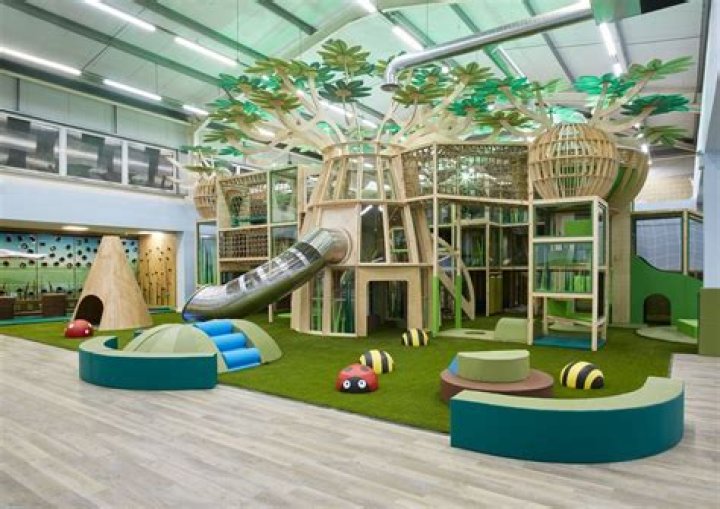
How to create a healthy and safe environment for your children

Encouraging safe exploration is an important job for child care providers. Children are natural explorers and risk takers. They move quickly, put things in their mouths, drop or throw things, and love to climb and hide. Keeping children safe is crucial. But setting up an environment where you spend all day saying “Don’t touch this!” or “Stay away from that!” is not the answer. Instead of spending your time redirecting children, think carefully about how you set up the environment. Giving children the chance to explore freely in a well-organized and child-safe space is a much more effective way to manage behavior and encourage learning.
If children in your child care program are misbehaving, check to see whether the environment is contributing to the problem. Take a close look at your space, indoors and outdoors. Setting up a safe place to play and providing appropriate toys can keep children interested in learning, reduce behavior problems, and save you from saying “No” too often.
Here are some tips to create a space that engages children and encourages safe exploration.
- Try a child’s-eye view. Get down to the children’s height and walk or crawl around the space. Pay attention to hazards you might not notice when standing up. By looking at the space from the child’s viewpoint, you may see accidents waiting to happen.
- Make sure your space is child-safe. Whether you are in a child care center or a family child care home, make your space safe for children. Store dangerous chemicals and medicines out of children’s reach. Cover electrical outlets, and store dangerous or breakable objects up high. Fix, lock up, or discard anything that might be a danger to children. Be sure all outdoor play areas are fenced in to keep children safe.
- Arrange your space wisely. Often the way you organize your child care space can make a difference in how children behave. If a space is too open, you may find children running wildly. Pay attention to where behavior problems occur. Set up shelves and other furniture to divide the room into separate learning and play areas. This will cut down on running and help children find activities more easily.
- Identify and cut off “runways.” Long, narrow spaces — including open hallways and long aisles in the classroom — encourage running. Break up those long, narrow spaces by rearranging furniture, or add barriers to discourage runners. Try staggering tables so you don’t have long, open aisles. Place seating areas or small tables at intervals down the hallway. These visual cues may help reduce running.
- Organize toys and supplies to make things easy for children. You will have fewer problems if children can find toys and supplies. Place toys on low shelves. Label the shelves with pictures and words so children will know where to put them back.
- Make sure there are enough toys. Problems often arise when children do not have enough toys or materials to play with. Think about what you need for children of different ages and interests. Plenty of paper to draw on; materials to sort, collect, trade, and share; dress-up clothes and props; puzzles and games; and well-maintained equipment to climb or ride on will keep children busy and interested.
- Make sure the toys match the children’s ages and abilities. Infants need toys that they can shake, drop, mouth, roll, and otherwise explore with their bodies. Toddlers need toys they can push, pull, grab, fill, dump, or yank without causing major damage. Toddlers have not yet learned how to share well, so purchasing several favorite toys can help prevent a lot of behavior problems. Preschoolers need more complex materials that keep them interested for longer periods and challenge their new learning skills.
- Teach children how to handle toys and materials. Explain and model how to carefully handle books, toys, and other materials. Even very young children can learn to treasure books, to turn the pages gently, to carry them carefully, and to read them in special places. Repeat this message a number of times, and give children plenty of opportunities to practice.
For More Information
To learn more about positive and safe child care environments that support children’s learning, check out the following eXtension Alliance for Better Child Care articles:
By Sarah Merrill and Jamie Sheehan
When we think about early learning environments, what comes to mind? Often, it’s things: alphabet puzzles, books lined up neatly on shelves, blocks, water tables, and more. But the most important part of a positive early learning environment is you. Teachers and family child care providers—all the education staff working with the children are what matter most. Though staff roles may look different across various types of settings (e.g., home-based, center-based, family child care), you remain the most important component of a responsive environment.
Positive early learning environments start with you when you create a positive social and emotional environment that is built on caring and responsive relationships. Children can’t explore and learn, experience joy and wonder, until they feel secure. They need to trust their caregivers and know their needs will be met. Young children need adults to establish the relationships by being consistent and responding to social and emotional cues, both in classrooms and home-based settings.
When you build a unique relationship with children, learn their cues and communications, their likes and dislikes, their strengths and the areas where they need support, you help them feel safe. That’s why providing nurturing, responsive, and effective interactions and engaging environments is the foundation of the Framework for Effective Practice, or the House Framework. The practices at the foundation of the house are critical to promote early learning and development in all domains.
But what you do for the children in your care is not everything! Take care of yourself! Make sure you feel safe and secure in the environment, too. When providers calmly manage the stresses and challenges they experience in an early childhood program, children feel safe and secure.
What helps you keep cool when challenges ramp up? When the toilet breaks one more time? When the children are antsy after a week of rain? Self-regulation skills. “Self-regulation” is your ability to manage your feelings, actions, and thoughts so you stay goal-directed and do not get derailed. For example, when a car pulls out in front of you on the highway, can you stay calm and carefully slow down so you don’t hit it? Will you still get to the movie on time? Your self-regulation skills are at work every day, in so many ways.
Young children are just learning how to regulate their emotions, behavior, and cognition. But they can’t do it alone. They need you! The Head Start Early Learning Outcomes Framework says it clearly in the Approaches to Learning and Social and Emotional Functioning domains, where the self-regulation goals for young children include “the support of familiar adults.”
Exactly what kind of support can you give young children? It’s called co-regulation. “Co-regulation” is an interactive process where adults provide regulatory support to children in the context of a shared, nurturing relationship. It looks different at different ages, but adult support remains a critical piece of the puzzle throughout childhood. Even as grown-ups, we often need support from others to regulate ourselves—think of when you call your mom or meet a friend to talk through a bad day.
You might co-regulate when a baby is startled by a dog barking loudly. You pick the baby up, rock him, reassure him in a gentle tone, and rub his back until he is calm again. A preschooler becomes incredibly angry when a peer pushes her on the playground. In this case, you might kneel to the child’s level and validate her feelings (e.g., “You’re very mad because someone pushed you!”) and suggest pro-social next steps (e.g., “Should we tell them how you feel?”). When you respond calmly to a child, the child’s feelings often de-escalate. Children tend to turn up the intensity if they feel they aren’t being understood. When you respond calmly, you show children what regulation looks like.
To work with children as they co-regulate, you need to:
- Identify your own feelings and reactions when you are stressed.
- Find healthy outlets to manage your emotions. Exercise can be an effective stress management practice for many people, while others find that meditation works best. Experiment and discover which strategies work for you.
- Pay attention to your thoughts and beliefs about child development, behavior expectations, and individual children. Make sure you’re interacting in developmentally, culturally, and linguistically responsive ways.
- Use strategies to calm yourself so you can respond to children effectively and compassionately. Decide what works best for you. Drinking a glass of water? Singing a song with the children?
A key part of building a positive early learning environment is providing children with the co-regulation they need. There are three main ways you can do this:
- First, build a warm and caring relationship with each child and their family. Your goal is to understand their development, communication style, and temperament. Some children may need a lot of support to co-regulate and others not as much. You only know those cues when you know the child. Parents can help you here because they know their children best!
- Second, create an environment of “yes” for children that buffers them from environmental stressors. Establish predictable routines, transition strategies, and behavioral expectations appropriate to their development. You can also create a “cozy corner” in your classroom or family child care home where children can go if they are feeling overwhelmed. Share these ideas with families so they can create “yes” spaces in their home.
- Third, offer children intentionally planned learning experiences to help them practice self-regulation skills. For example, you can plan fun activities to help children as young as 18 months learn to name their own feelings, recognize others’ feelings, and self-soothe in moments of distress. Model these skills yourself and point out when you see other children and adults using them, too. Review your curriculum to ensure it offers appropriate social and emotional learning opportunities.
You are the most important part of the early learning environment. Offering young children calm, nurturing, and predictable social and emotional environments, and promoting their self-regulation skills, helps them feel safe and secure so they can learn, play, and grow.
Sarah Merrill and Jamie Sheehan are Program Specialists for the Office of Head Start.
Creating a healthy environment at home is vital to the overall development of children, who learn from the influences around them. Part of parenting is creating the habits that will follow your children throughout their lifetimes and shape them as they mature. Instilling a healthy lifestyle in children when they are young can help build the framework for an entire lifetime of healthy habits.
One way to establish a healthy home environment is to practice healthy eating habits. Research has shown that making dinner a family affair leads to an encouraging environment for healthy eating. Families who share at least three meals a week have children who are 24 percent more likely to eat healthier foods than those in families who ate few or no meals together. This also coincides with a less likely chance of becoming overweight or practicing dangerous weight-loss efforts such as purging and taking laxatives or diet pills.
Homemade meals typically are lower calorie than their restaurant counterparts and also allow children to participate in the meal-making process. This allows for more family time and a deeper understanding of the creation for each meal. A stocked kitchen of healthy foods is important because children will eat what is available. The goal is to have at least five servings of fruits and vegetables a day, so encourage healthy snacking. The pantry should include whole wheat bread and cereals and limit low-nutrient snacks as an occasional treat. In addition, serve water or milk and reduce sugar intake by eliminating soda and fruit-flavored drinks.
Parents play an important role in a family’s health because they serve as the models for children to follow. It is important for parents to eat healthy to send the right message. As children follow their parents’ lead, they too will slowly develop healthy eating habits. Acting as a good role model also includes explaining feelings of fullness to discourage overeating. Serving appropriate portion sizes can easily maintain this, too. Also, get children involved in the entire meal process—take them grocery shopping, decide together upon healthy dinner options and teach them to read food labels.
Encouraging children to enjoy outdoor activities by playing games in the yard or going on hikes is another way to develop a healthy home environment. Playing ball with your child or involving them in sports not only helps instill a healthy lifestyle, but also helps them develop coordination and important social skills not attained by sitting in front of a television. Teaching your children the joys of sports early in life can help them find their talents and teach them to appreciate exercise as a form of fun.
Talking positively, encouraging your children and rewarding them with positive feedback helps reinforce good behavior and healthy habits in and outside the home. When your children choose to be active, learn about a topic, select a healthy snack or get involved with others, positively reinforce these actions by supporting your child and ensuring that their good choices are noticed and applauded. This helps build your child’s self-confidence.
Providing your child with consistent responsibilities is an important building block for future success. Even small tasks such as planning and creating their snacks or lunches, sending holiday cards to friends and family, or cleaning the house, offers each the opportunity to take ownership, teaches how to complete the required tasks and also allows you the opportunity to correct their choices along the way.
Exposing a child to a positive environment with positive role models, healthy food options, outside activities and intriguing mental challenges will increase their ability to become a more positive individual. Such an upbringing will help each child make choices that perpetuate a healthy outlook and a healthy lifestyle for years to come.